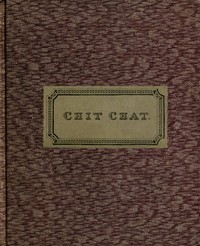
Chit-chat, or Short Tales in Short Words by Maria Elizabeth Budden
So, what exactly is Chit-chat? Published in 1824, it’s a collection of very short stories by Maria Elizabeth Budden. This isn't a novel with a single plot. Instead, it’s a series of tiny moral fables, each just a few pages long. They were written for children, with the goal of making good behavior appealing and bad choices clearly foolish.
The Story
Each tale focuses on a simple situation. In one, a boy is tempted to steal fruit from an orchard. In another, a girl neglects her studies to play. A brother might be cruel to an animal, or a sister might tell a small fib. The stories follow a clear pattern: a child makes a poor choice, faces the natural (or sometimes divinely arranged) consequences, learns a lesson, and reforms. The characters have names like Charles, Lucy, and Henry, and their worlds revolve around home, school, and garden. The drama is small-scale but meant to feel hugely important to a young reader.
Why You Should Read It
Reading this today is less about the morals themselves—which can feel quite strict to modern eyes—and more about the window it opens. You get to see the values of a different time, packaged as entertainment. Budden wasn’t a famous literary giant, and that’s what makes this special. It’s ordinary, mainstream thought from the past. The language is old-fashioned but clear, and there’s a quaint sincerity to it. You can almost hear the voice of a well-meaning governess or parent. It’s a reminder that people have always worried about raising good kids, even if their methods seem different now.
Final Verdict
This book isn't for everyone. If you're looking for a gripping plot or complex characters, you won't find it here. But it's perfect for history lovers, teachers, or anyone fascinated by social history. It's a primary source on how children were spoken to 200 years ago. It’s also a great choice if you enjoy dipping into old books for a short while, just to taste the atmosphere of another era. Think of it as a literary artifact: simple, direct, and full of the hopes and fears of parents from a world long gone.
The copyright for this book has expired, making it public property. Use this text in your own projects freely.
Jackson Walker
8 months agoWithout a doubt, the emotional weight of the story is balanced perfectly. Exactly what I needed.
Joshua Sanchez
8 months agoPerfect.
Charles Martinez
3 months agoI started reading out of curiosity and the character development leaves a lasting impact. Exactly what I needed.



Barbara Moore
1 year agoI was skeptical at first, but the author's voice is distinct and makes complex topics easy to digest. Absolutely essential reading.