
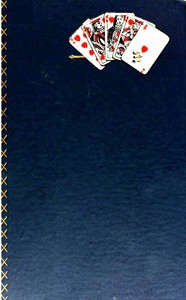
The Devil's picture-books by Mrs. John King Van Rensselaer
Let's be honest—most of us see a deck of cards and think about game night or a magic trick. 'The Devil's Picture-Books' flips that idea completely on its head. Published in 1890, this book isn't a dry history lesson. It's a passionate investigation into the hidden world of playing cards, treating them like ancient artifacts packed with meaning.
The Story
The book doesn't follow a single character or plot. Instead, it follows the journey of the playing card itself. Mrs. Van Rensselaer starts by asking a simple question: where did these things come from? The answer takes us from ancient China and Egypt, through the Middle Ages in Europe, and right up to the Victorian era. She explores how cards were used for gambling, education, and telling fortunes long before they became standard for games like bridge. A big part of the story is the controversy—for centuries, religious and civic leaders saw cards as dangerous, calling them tools of the devil that led people to vice. The book breaks down the symbolism of the court cards (Kings, Queens, Jacks) and the four suits, linking them to historical classes and social structures. It's the biography of an object we all know, revealing a past most of us never imagined.
Why You Should Read It
I picked this up out of curiosity and couldn't put it down. The author's enthusiasm is contagious. She isn't just listing facts; she's telling a story about human nature—our love for games, our fear of the unknown, and our habit of embedding stories in everyday items. You'll never look at the Queen of Spades the same way again. The writing is clear and feels like a smart friend explaining something cool they just learned. It's packed with odd details and anecdotes that are perfect for sharing. Reading it made me realize how much history is sitting in our junk drawers.
Final Verdict
Perfect for history buffs who enjoy 'micro-histories' of everyday objects, fans of quirky non-fiction, and anyone who loves a good conversation starter. If you enjoyed books like 'Salt' or 'The Professor and the Madman,' you'll appreciate this deep dive into a common item. It's also great for card players and collectors who want to know the deeper meaning behind their decks. Fair warning: it might ruin your next poker game because you'll be too busy wondering about the 700-year-old symbolism of your hand!
This masterpiece is free from copyright limitations. Thank you for supporting open literature.
Mary Martinez
4 months agoBefore I started my latest project, I read this and the author’s unique perspective adds a fresh layer to the discussion. I'm glad I chose this over the other alternatives.
Barbara White
6 months agoI was skeptical about the depth of this book at first, but the transition between theoretical knowledge and practical application is seamless. I'm glad I chose this over the other alternatives.
Joseph Taylor
1 year agoI decided to give this a try based on a colleague's recommendation, the logic behind each conclusion is easy to follow and verify. Thanks for making such a high-quality version available.







Karen Martin
2 years agoAs someone working in this industry, I found the insights very accurate.