
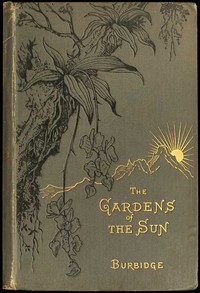
The Gardens of the Sun by F. W. Burbidge
I’ll be honest, I picked up The Gardens of the Sun expecting a gentle history of Victorian gardening. What I got was a first-hand account of botanical espionage. This isn't a novel; it's Burbidge's own journal from his 1877-1878 expedition, and it reads like an adventure story he never intended to write.
The Story
Burbidge was employed by the Chatsworth estate, the home of the Duke of Devonshire, who was obsessed with having the most spectacular collection of exotic plants. Burbidge's mission was simple: travel to Borneo, the Philippines, and other islands in Southeast Asia, and bring back living specimens of plants no one in England had ever seen. The catch? He often had to go where Europeans weren't welcome, negotiating with local chiefs and navigating dense, uncharted jungle. The book follows his journey from tense meetings in longhouses to perilous river trips, all while trying to keep hundreds of delicate orchids and pitcher plants alive on a months-long sea voyage home.
Why You Should Read It
What makes this book special is Burbidge's voice. He's not a stuffy scientist; he's a practical gardener in over his head, constantly worried about his 'green treasure.' You feel his genuine awe for the forests he explores, even as he's dismantling them for shipment. There's a tension there that's very modern—the thrill of discovery clashes with the reality of colonial-era collecting. His descriptions are so vivid you can almost feel the jungle humidity and smell the strange flowers. He also has a dry sense of humor about the hardships, which keeps the narrative light and engaging.
Final Verdict
This is a perfect read for anyone who loves real-life adventure tales, garden history, or unique travel writing. It's for the reader who enjoys The Lost City of Z but prefers stories where the treasure is a rare orchid instead of gold. You get adventure, a slice of social history, and a new appreciation for every exotic plant you see in a botanical garden. Just be prepared to look at your potted fern a little differently afterwards.
This work has been identified as being free of known copyright restrictions. You are welcome to share this with anyone.
Margaret Williams
4 months agoThe clarity of the concluding remarks is very professional.
Nancy Martinez
10 months agoMy first impression was quite positive because the clarity of the writing makes even the most dense sections readable. Simple, effective, and authoritative – what else could you ask for?
Kimberly Brown
2 months agoUnlike many other resources I've purchased before, the logic behind each conclusion is easy to follow and verify. A mandatory read for anyone in this industry.
Patricia Martinez
2 years agoLooking at the bibliography alone, the language used is precise without being overly academic or confusing. This should be on the reading list of every serious professional.








Michael Jones
1 year agoExactly what I was looking for, thanks!