
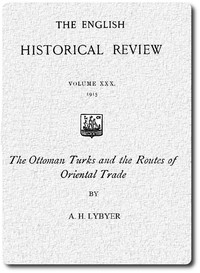
The Ottoman Turks and the Routes of Oriental Trade by Albert Howe Lybyer
Let's set the scene. It's the 15th century. Europe is obsessed with spices from Asia—pepper, cinnamon, cloves. These goods traditionally came overland through the Middle East. Then, a powerful new empire, the Ottomans, conquers Constantinople in 1453 and spreads its control over these key land routes. The standard history lesson says this Ottoman wall cut Europe off, sparking the Age of Exploration as Europeans desperately sought new sea paths to Asia (hello, Columbus!).
The Story
Albert Lybyer's book challenges that neat cause-and-effect. He doesn't just repeat the old tale; he investigates it like a historian-sleuth. Using sources from the era, he paints a more complex picture. He argues that the Ottomans didn't simply slam the door shut. Instead, they managed the trade, taxing it heavily but rarely stopping it completely. The real disruption, he suggests, came from other factors like political shifts within the Muslim world and the actions of rivals like the Mamluks in Egypt. The book walks you through the politics, the economics, and the geography, showing how trade routes were more flexible and resilient than we often assume.
Why You Should Read It
This isn't just about old spice deals. It's about how we understand cause and effect in history. Lybyer makes you question a 'big idea' you probably learned in school. It's satisfying to see historical myth-busting in action, especially regarding something as foundational as the motives for European exploration. You get a clearer view of the Ottomans not as cartoonish blockers, but as pragmatic players in a global game. Reading it, you feel like you're uncovering a hidden layer of the past, one that shows how interconnected the world always was, even 500 years ago.
Final Verdict
Perfect for history buffs who enjoy having their assumptions challenged, or for anyone curious about the real stories behind our globalized world. It's a scholarly work from 1915, so be ready for a dense, academic style—it's not a breezy novel. But if you're willing to put in the effort, the payoff is a much richer understanding of a pivotal moment that shaped modern continents and economies. Think of it as the deep-cut, argumentative prequel to every book about Columbus and da Gama you've ever read.
This title is part of the public domain archive. Access is open to everyone around the world.
Andrew Allen
9 months agoSimply put, the plot twists are genuinely surprising. Worth every second.




Richard Hill
1 year agoHaving read this twice, the pacing is just right, keeping you engaged. A true masterpiece.