
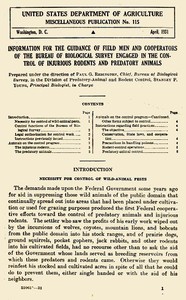
Information for the Guidance of Field Men and Cooperators of the Bureau of…
Let's be clear from the start: this is not a novel. You won't find a sweeping narrative or deep character arcs. What you will find is a primary source document so specific and functional that it becomes strangely captivating. Published in 1927, this book was the official handbook for the field agents and cooperators (often ranchers) working with the U.S. Bureau of Biological Survey. Their mission? Predator control.
The Story
There's no plot, but there is a clear purpose. The book systematically lays out the job. It starts by defining the 'problem'—wolves, coyotes, mountain lions, and other predators seen as threats to livestock and game. Then, it gets down to business. Page after page details the approved methods for dealing with them. You'll find precise instructions on how to use leg-hold traps, set poison baits (like strychnine-laced meat), and even deploy explosives (for destroying wolf dens). It covers everything from identifying animal tracks and scat to proper record-keeping and submitting reports to Washington. It reads like a technical manual because that's exactly what it was—a tool for standardizing a nationwide effort.
Why You Should Read It
This book's power is in its stark, unemotional clarity. The authors aren't villains; they're civil servants documenting the most efficient procedures for a job their society asked them to do. That's what makes it so thought-provoking. There's no discussion of ecology, animal suffering, or long-term impact. It's purely about method and results. Reading it today, with our modern understanding of predator roles in ecosystems, it feels like a document from another planet. You get a raw, unfiltered look at the practical mechanics of America's war on predators, an effort that reshaped entire landscapes. It's a sobering reminder of how drastically human attitudes toward the natural world have changed in less than a century.
Final Verdict
This book is a niche read, but a powerful one. It's perfect for history buffs, especially those interested in the American West, environmental history, or the history of science and government. It's also great for anyone who enjoys primary sources that make you think. You won't get a thrilling adventure tale, but you will get an authentic, unsettling, and absolutely fascinating look into a chapter of American history that was written in wire, steel, and poison. Keep your expectations in check—it's a manual—but if you're curious about the 'how' behind a major historical shift, this is an unforgettable document.
No rights are reserved for this publication. Knowledge should be free and accessible.
Jennifer Taylor
1 year agoThis digital copy caught my eye due to its reputation, the objective evaluation of the pros and cons is very refreshing. A mandatory read for anyone in this industry.
Ab Y
1 month agoHey team uhuqu.com, Hope your doing well! I just following your website and realized that despite having a good design; but it was not ranking high on any of the Search Engines (Google, Yahoo & Bing) for most of the keywords related to your business. We can place your website on Google's 1st page. * Top ranking on Google search! * Improve website clicks and views! * Increase Your Leads, clients & Revenue! Interested? Please provide your name, contact information, and email. Bests Regards, Aby Best AI SEO Company Accounts Manager www.bestaiseocompany.com Phone No: +1 (949) 508-0277
Lucy Gordon
1 month agoHello team, "uhuqu.com" I came across your website on the Internet and saw that it was not showing up in any of the search engines (Google, Yahoo, and Bing) for the majority of keywords associated with your company. We can manage all as we have a 150+ expert team of professionals and help you save a hefty amount on hiring resources. We can place your website on Google's 1st page. We will improve your website’s position on Google and get more traffic. I can send you more details on the packages/Portfolio/past work details. Thank you, Lucy Gordon Note : Proficient with Squarespace, Shopify, Wix, WordPress, GoDaddy, and similar tools.










George Thomas
4 months agoI stumbled upon this title during my weekend research and the transition between theoretical knowledge and practical application is seamless. I’ll definitely be revisiting some of these chapters again soon.