
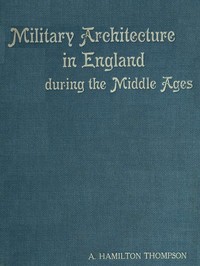
Military Architecture in England During the Middle Ages by A. Hamilton Thompson
Forget dry lists of dates and kings. Military Architecture in England During the Middle Ages is a guidebook to the language of power written in stone and earth. A. Hamilton Thompson, a respected historian and archaeologist, wrote this to explain how castles and fortified buildings worked, not just who owned them.
The Story
There isn't a traditional plot, but there is a clear story being told: the story of a building's purpose. The book starts with the basic needs after 1066—quick, strongholds to control a conquered land. It walks you through the early motte-and-bailey castles (those big mounds with a wooden tower on top) and then shows how necessity forced innovation. As siege weapons got better, walls had to get thicker and designs more clever. Thompson explains the development of key features: the strategic advantage of a great tower (keep), the deadly science of arrow loops and murder holes, the genius of concentric walls. He moves beyond the famous royal castles to include fortified manor houses, town walls, and even gatehouses, painting a full picture of a fortified landscape.
Why You Should Read It
This book gives you a superpower: the ability to read a ruin. After reading Thompson's clear explanations, you'll visit a castle and immediately start spotting the defensive logic. You'll understand why the entrance is a confusing maze, why the chapel is often in the most secure spot, and how every curve and corner was a response to a threat. It makes history tactile. You're not just learning about a siege; you're learning how the very shape of the building made that siege possible or doomed it to fail. Thompson's passion for the subject is evident, and he writes with authority but without being stuffy.
Final Verdict
This is the perfect book for anyone who has ever climbed a castle stairwell and wanted to know more. It's ideal for history fans who enjoy the 'how' and 'why' behind the big events, for travelers planning a UK trip, or for writers and world-builders looking for authentic details. It's not a light read, but it's a deeply rewarding one. If you want to look at a medieval wall and see a story of conflict, ingenuity, and daily life, this book is your key.
This historical work is free of copyright protections. Use this text in your own projects freely.
Kenneth Brown
1 year agoComprehensive and well-researched.
Elizabeth Smith
3 months agoThe formatting on this digital edition is flawless.
Patricia Wilson
4 months agoSurprisingly enough, the content flows smoothly from one chapter to the next. Highly recommended.
James Johnson
1 year agoFive stars!




Dorothy Young
1 year agoThis book was worth my time since the atmosphere created is totally immersive. I couldn't put it down.