About 300 minutes
The Roman Question — Edition Insights
Modern Nations
68,811 recorded words. 0 minutes difference from this book's estimate.
View Gutenberg source #14381
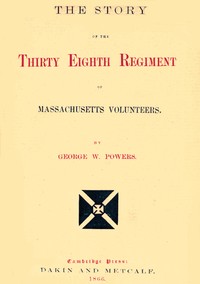
This digital edition of The story of the Thirty Eighth regiment of Massachusetts volunteers — Themes and Context is described by source-level measurements including 68,815 words, 5 hr estimated reading time, and 40 detected text sections.
The text analysis averages about 15.5 words per sentence, while the detected sections provide another way to judge how the source is divided.
Project Gutenberg metadata also associates the work with “United States -- History -- Civil War, 1861-1865 -- Regimental histories,” connecting these edition facts with the source record’s subject description.
Explore this collection
These alternatives are selected using recorded categories and estimated reading time.
About 300 minutes
Modern Nations
68,811 recorded words. 0 minutes difference from this book's estimate.
View Gutenberg source #14381About 297 minutes
Modern Nations
68,249 recorded words. 3 minutes difference from this book's estimate.
View Gutenberg source #13066About 281 minutes
Modern Nations
64,528 recorded words. 19 minutes difference from this book's estimate.
View Gutenberg source #4786Search stored excerpts and compare books → Choose by your preferences →
Choices use stored catalog measurements. Estimates vary with reading speed. A shared category is a catalog label, not a claim that two books have the same argument or literary quality.
Search reads excerpt text stored with this catalog and links to its associated Gutenberg record. The connection is stored in the site database; this tool does not recheck that every excerpt is word-for-word identical to that external record. Excerpt search does not cover every chapter and does not verify historical publication dates.
Catalog snapshot checked: 2026-09-26. Coverage: 100 public books, 100 available source excerpts.
Calculated from edition completeness, EPUB availability, text structure and catalogue metadata. Not a user rating.
Total of 100 points, scaled to a 2.5-5.0 range. Editions with an empty description or a missing EPUB file are not scored.
Public-domain source text
The source text is kept in the dedicated reader, separate from this catalogue record and its commentary.
George W. Powers opens his regimental history with a preface that explicitly defines the book's scope: it is not a chronicle of armies or campaigns, but a record of the Thirty Eighth Regiment's own movements and smaller matters. He states that nothing has been drawn from imagination and no attempt made at word-painting. This direct, modest framing sets expectations for a fact-based, ground-level account. The reader should therefore approach the text as a deliberate narrowing of focus, where the regiment's daily events—not generals' strategies—are the primary subject.
The preface, dated 1865, is the most important guide to reading the book. Powers declares he has not attempted to describe scenery or the manners of the people, and that individual names seldom occur except to illustrate a movement. This is not a memoir of personalities but a collective narrative. He notes that for thirty-two of thirty-five months he was with the regiment, recording daily events for friends at home. The remaining period, including part of the Shenandoah campaign, he credits to other sources. This honesty about gaps in firsthand knowledge is rare in such works and invites the reader to note where the narrative may rely on secondhand reports.
Midway through the excerpts, a long poem titled “Sheridan’s Ride” appears, celebrating the general’s famous twenty-mile dash. The poem is rhythmic and patriotic, with lines like “The roar of that red sea uncontrolled.” Its inclusion is striking because Powers earlier disavowed word-painting. The poem serves as a dramatic set piece, but its style contrasts sharply with the surrounding prose. A first-time reader might wonder whether Powers inserted it to break the monotony of logistical detail or to underscore a moment of high morale. The poem’s presence suggests that the author occasionally allowed himself a broader, more emotional register, even within a self-constrained narrative.
After the poem, the text returns to a terse, factual tone: “The men had lost everything not on their persons,—clothing, blankets, likenesses of friends, letters, journals of the two years’ service.” The passage lists specific losses—over thirty comrades sent to Salisbury or the Libby—and then moves to bivouacking, marching, and the arrival of the paymaster. This juxtaposition of catastrophe and routine is characteristic of the book. Powers does not dwell on emotion; he records. For the reader, these details—the visit from Mr. Wellington, the corps review on November 7, the packing of wagons on the 10th—build a cumulative picture of army life as a cycle of deprivation, small comforts, and constant readiness.
Powers’s preface warns that he will not describe the movements of armies except to illustrate the regiment’s doings. Yet the excerpts show that larger operations—like the retreat from Cedar Creek and the pursuit by cavalry—are necessarily referenced. The reader must infer the broader context from these mentions. For example, the army “fell back to Kearnstown” and “heavy breastworks were thrown up.” Without external knowledge, the strategic significance is unclear. Powers assumes his audience (originally friends at home) already knows the war’s outline. A modern reader may benefit from a map or timeline of the Shenandoah Valley campaigns to place the regiment’s marches and skirmishes in context.
Powers’s history rewards a reader who pays attention to small details—the loss of journals, the arrival of supplies, the names of camps. The preface’s promise of a “connected and reliable account” is kept through a steady accumulation of such specifics. The poem stands as an anomaly, a reminder that even a disciplined chronicler sometimes reaches for a larger voice. For a first reading, trust the preface’s frame, note where the narrative shifts tone, and let the regiment’s own story emerge from the accumulation of marches, losses, and paydays.
Reading the careful regimental history, I kept thinking how Powers’s quiet devotion to his men’s lived details felt like a private archive, not a grand statement. That same respect for footsteps rather than headlines surfaced later in Theodore Roosevelt and His Times: A Chronicle of the Progressive Movement — Background and Themes, where policy matters less than the temper of those who shaped it. Both books hold a moment gently, as if afraid to startle it.
Save your reaction, strongest insight, and memorable passage.