About 720 minutes
Christopher Columbus and the New World of His Discovery — Complete — Story, Setting & Ideas
Modern Nations
165,544 recorded words. 2 minutes difference from this book's estimate.
View Gutenberg source #4116
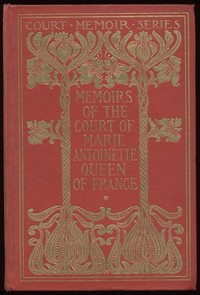
Before opening Memoirs of the Court of Marie Antoinette, Queen of France, Complete Being the Historic Memoirs of Madam Campan, First Lady in Waiting to the Queen — Background and Themes, the edition data offers a quick orientation: 166,032 words, 12 hr 2 min estimated reading time, and 15 detected text sections.
The text analysis averages about 24.7 words per sentence, while the detected sections provide another way to judge how the source is divided.
Project Gutenberg metadata also associates the work with “France -- Court and courtiers,” connecting these edition facts with the source record’s subject description.
Explore this collection
These alternatives are selected using recorded categories and estimated reading time.
About 720 minutes
Modern Nations
165,544 recorded words. 2 minutes difference from this book's estimate.
View Gutenberg source #4116About 764 minutes
Modern Nations
175,578 recorded words. 42 minutes difference from this book's estimate.
View Gutenberg source #12077About 675 minutes
Modern Nations
155,168 recorded words. 47 minutes difference from this book's estimate.
View Gutenberg source #7304Search stored excerpts and compare books → Choose by your preferences →
Choices use stored catalog measurements. Estimates vary with reading speed. A shared category is a catalog label, not a claim that two books have the same argument or literary quality.
Search reads excerpt text stored with this catalog and links to its associated Gutenberg record. The connection is stored in the site database; this tool does not recheck that every excerpt is word-for-word identical to that external record. Excerpt search does not cover every chapter and does not verify historical publication dates.
Catalog snapshot checked: 2026-09-26. Coverage: 100 public books, 100 available source excerpts.
Calculated from edition completeness, EPUB availability, text structure and catalogue metadata. Not a user rating.
Total of 100 points, scaled to a 2.5-5.0 range. Editions with an empty description or a missing EPUB file are not scored.
Public-domain source text
The source text is kept in the dedicated reader, separate from this catalogue record and its commentary.
Campan opens her memoirs by lamenting the lack of reliable firsthand records from those closest to Louis XVI, arguing that the mainsprings of great events in absolute monarchies are known only to the most exalted persons. She lists the ministers and courtiers whose unwritten testimonies leave gaps in revolutionary history, establishing her own position as a corrective witness. This preface frames the memoir not as a complete history but as a partial, insider supplement to the official record.
The excerpt from the period of the States General shows Campan alone with Marie Antoinette during her morning coffee. The queen, upon hearing that the King has assented to the convocation, exclaims, “Great Heavens! what fatal news goes forth this day!” and predicts it as “a first fatal signal of discord in France.” Campan records the queen’s tears, her inability to finish her coffee, and her later analysis that the Parliament had compelled the King to a measure “long considered fatal to the repose of the kingdom.” This scene is valuable for its intimacy: Campan does not merely report events but captures the queen’s spontaneous emotional and political judgment, offering a rare glimpse of her private fears before the crisis escalated.
Campan details the queen’s growing alienation from the Comte d’Artois and the Polignac circle. While the queen favored the double representation for the Tiers Etat, the Comte d’Artois opposed it, presenting a memorial to the King. Campan notes that the queen’s confidential advisers “infused into her apprehensions that the Prince was made the tool of a party.” She describes how the queen continued to frequent Madame de Polignac’s circle only to avoid the appearance of a change in habits, but returned “unhappy,” finding that “the devotion of friendship had vanished, to make way for the coldness of etiquette.” This passage reveals the personal cost of political divisions within the royal family and the queen’s emotional vulnerability, which Campan observes directly.
On May 4, 1789, the opening of the States General, the queen appeared “for the last time in her life in regal magnificence.” Campan recounts that during the procession, low women cried out “Vive le Duc d’Orleans!” in a threatening manner, causing the queen to nearly faint. She had to be supported, and those around feared the procession might stop. The queen later regretted her lack of presence of mind. Campan uses this moment to mark a turning point: the public hostility that would only intensify. She then attributes the growing distrust of the King and Queen to “incessant corruption by English gold” and the ambitions of the Duc d’Orleans, citing the queen’s own warnings to her not to go to Paris on certain days because “the English have been scattering gold.”
Throughout these excerpts, Campan interweaves personal observation with broader political analysis. She does not simply record what she saw but offers interpretations: the queen’s tears are paired with a discussion of the double representation; the near-fainting in the procession leads to a theory of English gold and Orleansist conspiracy. This dual role—as eyewitness and commentator—shapes the memoir’s authority. Readers should note that Campan’s perspective is that of a loyal servant who shared the queen’s anxieties and suspicions. Her accusations against the Duc d’Orleans and English influence are presented as fact, but they reflect the queen’s own beliefs and the court’s partisan atmosphere. The memoir thus offers not an objective history but a deeply situated, personal account that reveals how the queen and her circle understood the unfolding revolution.
Campan’s memoirs are best read as a companion to broader histories of the French Revolution, not as a substitute. Her proximity to the queen gives weight to her descriptions of private moments, but her political judgments—especially regarding the Duc d’Orleans and English gold—should be weighed against other sources. The strength of the work lies in its concrete details: the coffee cup set down, the tears, the whispered fears. These are the fragments that bring the queen to life, and they are Campan’s enduring contribution.
Reading how the queen’s private anguish sat beneath the ceremonial rooms made me remember my grandfather’s old diary—not royal, just a soldier’s. He never spoke of fear, only mud and letters. That same quiet holding-in appears in The story of the Thirty-Third N. Y. S. Vols or two years campaigning in Virginia and Maryland — Reading Notes, where daily routine muffles dread. Both books whisper what official records leave out.
Build a private reading journal entry for this title.