About 392 minutes
London to Ladysmith via Pretoria — Edition Insights
World Events
89,952 recorded words. 7 minutes difference from this book's estimate.
View Gutenberg source #14426
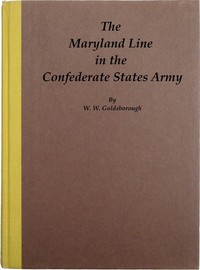
The source record for The Maryland Line in the Confederate States Army. — A Closer Reading measures this digital text at 88,520 words, 6 hr 25 min estimated reading time, and 31 detected text sections.
The text analysis averages about 24.1 words per sentence, while the detected sections provide another way to judge how the source is divided.
Project Gutenberg metadata also associates the work with “Confederate States of America. Army,” connecting these edition facts with the source record’s subject description.
Explore this collection
These alternatives are selected using recorded categories and estimated reading time.
About 392 minutes
World Events
89,952 recorded words. 7 minutes difference from this book's estimate.
View Gutenberg source #14426About 377 minutes
World Events
86,549 recorded words. 8 minutes difference from this book's estimate.
View Gutenberg source #12429About 357 minutes
World Events
81,966 recorded words. 28 minutes difference from this book's estimate.
View Gutenberg source #52142Search stored excerpts and compare books → Choose by your preferences →
Choices use stored catalog measurements. Estimates vary with reading speed. A shared category is a catalog label, not a claim that two books have the same argument or literary quality.
Search reads excerpt text stored with this catalog and links to its associated Gutenberg record. The connection is stored in the site database; this tool does not recheck that every excerpt is word-for-word identical to that external record. Excerpt search does not cover every chapter and does not verify historical publication dates.
Catalog snapshot checked: 2026-09-26. Coverage: 100 public books, 100 available source excerpts.
Calculated from edition completeness, EPUB availability, text structure and catalogue metadata. Not a user rating.
Total of 100 points, scaled to a 2.5-5.0 range. Editions with an empty description or a missing EPUB file are not scored.
Public-domain source text
The source text is kept in the dedicated reader, separate from this catalogue record and its commentary.
W. W. Goldsborough, a major in the Confederate States Army, opens his 1869 regimental history with a frank admission: his is a 'feeble pen' and he is 'unaccustomed to such work.' The book is a deliberate corrective, written because 'nothing has been presented to the world to show the prominent part taken in the Great Rebellion by the sons of Maryland.' Goldsborough’s voice is that of a veteran compiling a record for future historians, not a professional writer. The narrative proceeds unit by unit—First Maryland Infantry, Second Maryland Infantry, First Maryland Battalion of Cavalry, Baltimore Light Artillery—with each section punctuated by dense tables of killed, wounded, and missing. The prose shifts between proud summary and stark accounting, as when he notes that out of 149 men in one fight, 43 were casualties.
Goldsborough’s language is consistently defensive and honor-bound. He frames Maryland’s role as overlooked, writing that 'future generations seem likely to look in vain for a record of the patient suffering and heroic achievements of their forefathers.' The dedication to Major-General Isaac R. Trimble—calling him 'the soldier “without fear and without reproach”'—sets a chivalric tone. Throughout, the author emphasizes that Marylanders were 'elegant and refined gentlemen' reduced to rags, yet they 'never complained.' This rhetorical posture, blending grievance with stoicism, shapes every description of hardship.
The most distinctive structural feature is the repeated insertion of detailed casualty tables. After describing the Battle of Pegram’s Farm, Goldsborough lists each company’s losses by name, rank, and wound severity: 'Corporal S. Pinckney Gill, George Deatore; wounded, Captain George Thomas, severely.' The same pattern recurs for the Battle of Squirrel Level Road. These lists are not appendices but interrupt the narrative flow, forcing the reader to confront the human cost in a methodical, almost bureaucratic manner. The effect is cumulative: the reader sees not just events but precise, named losses.
The narrative pace changes markedly after the battle accounts. Following the Squirrel Level Road engagement, Goldsborough slows to describe the 'long, cold winter' when the Second Maryland, reduced to about 100 men, was 'kept almost constantly on picket' because other troops deserted. His prose becomes more reflective: 'Elegant and refined gentlemen, who at home never knew what it was to want for a single comfort, were in rags and tatters, sleeping in mud and filth.' The shift from action to endurance—from battle to the 'dreary fall'—underscores the theme of steadfastness. The author’s own voice, apologetic in the introduction, here grows quietly emphatic.
Readers should approach this book as a primary document rather than a polished history. Goldsborough’s biases are overt: he writes to vindicate Maryland’s Confederate soldiers and to counter what he saw as neglect. The casualty lists, though dry, offer granular data for researchers. The narrative’s unevenness—alternating between brisk battle summaries and lingering winter scenes—reflects the author’s priorities. For those studying Civil War memory or regimental histories, this is a valuable, if partisan, artifact.
There’s a particular ache in that major’s pride, those meticulous lists of names — men who believed they were fighting for something lasting. It reminds me of how the old gardener in The Last Leaf Observations, during Seventy-Five Years, of Men and Events in America and Europe — Story, Setting & Ideas watches seasons turn, holding onto what the years quietly take. Both books feel like hands cupped around a fading ember.
Build a private reading journal entry for this title.