About 178 minutes
A Tale of One City: the New Birmingham Papers Reprinted from the "Midland Counties Herald" — Themes and Context
Social History
40,913 recorded words. 38 minutes difference from this book's estimate.
View Gutenberg source #11356
The source record for Klondyke Nuggets: A Brief Description of the Great Gold Regions in the Northwest — Inside the Classic measures this digital text at 31,982 words, 2 hr 20 min estimated reading time, and 3 detected text sections.
The text analysis averages about 23.2 words per sentence, while the detected sections provide another way to judge how the source is divided.
Project Gutenberg metadata also associates the work with “Alaska -- Gold discoveries,” connecting these edition facts with the source record’s subject description.
Explore this collection
These alternatives are selected using recorded categories and estimated reading time.
About 178 minutes
Social History
40,913 recorded words. 38 minutes difference from this book's estimate.
View Gutenberg source #11356About 71 minutes
Social History
16,329 recorded words. 69 minutes difference from this book's estimate.
View Gutenberg source #14134About 285 minutes
Social History
65,459 recorded words. 145 minutes difference from this book's estimate.
View Gutenberg source #10003Search stored excerpts and compare books → Choose by your preferences →
Choices use stored catalog measurements. Estimates vary with reading speed. A shared category is a catalog label, not a claim that two books have the same argument or literary quality.
Search reads excerpt text stored with this catalog and links to its associated Gutenberg record. The connection is stored in the site database; this tool does not recheck that every excerpt is word-for-word identical to that external record. Excerpt search does not cover every chapter and does not verify historical publication dates.
Catalog snapshot checked: 2026-09-26. Coverage: 100 public books, 100 available source excerpts.
Calculated from edition completeness, EPUB availability, text structure and catalogue metadata. Not a user rating.
Total of 100 points, scaled to a 2.5-5.0 range. Editions with an empty description or a missing EPUB file are not scored.
Public-domain source text
The source text is kept in the dedicated reader, separate from this catalogue record and its commentary.
Joseph Ladue, founder of Dawson City, opens his 1897 guide with a direct claim to authority: he began erecting the first house in the region on September 1, 1896, the day after gold was discovered. The preface frames the book as a stopgap, written because he could not personally answer the flood of inquiries he received after returning from the Klondike. He promises a fuller work, Klondyke Facts, but here offers a condensed description of the gold regions in the Canadian Northwest and Alaska. The tone is practical and promotional, aimed at the intending prospector rather than the armchair reader.
Ladue’s preface establishes his credentials by stating he has lived in the region continuously since 1882. He does not merely report secondhand; he claims to have built Dawson City itself. This personal stake shapes the book’s voice. When he writes that Dawson City’s population in June 1897 exceeded 4,000 and predicts it will reach 25,000 by the next June, he is both describing and advocating for the boom. His language is confident, even hyperbolic, but grounded in the specifics of sawmills, churches of four denominations, and the presence of the Northwest Mounted Police. The reader is encouraged to trust his estimates because he was there.
A substantial portion of the excerpts concerns navigation on the Yukon River system. Ladue includes a detailed account of the Lewes River, measuring widths, depths, and currents. He notes that from the head of Lake Bennet to the cañon, the distance is ninety-five miles, navigable for boats drawing five feet or more. The cañon itself is described as five-eighths of a mile long, about 100 feet wide, with perpendicular basaltic rock banks 60 to 100 feet high. He calculates the total fall in the cañon and rapids at 32 feet and suggests a tram or railway could bypass the obstacle. These passages read like a surveyor’s log, offering precise distances and practical assessments of difficulty.
Ladue’s observations on the Tagish Indians are brief but revealing. He describes their houses as “a poor copy” of Hudson’s Bay Company structures, noting they are now generally on the coast because it is easier to live there. He adds that what the Tagish make in their own country is taken by Coast Indians, so there is little inducement for them to remain. This passage, embedded in a geographical description, treats Indigenous people as part of the landscape—a factor in the region’s accessibility and resources. The tone is detached, reporting without sympathy or condemnation, which aligns with the book’s overall focus on practical information for incoming prospectors.
Throughout the excerpts, Ladue repeatedly refers to his forthcoming Klondyke Facts, a 224-page book with illustrations and maps. This self-promotion shapes the structure of Klondyke Nuggets as a teaser. He writes that it is “well-nigh impossible to tell the truth of these recent discoveries of gold” in a small work, implying that the larger book will contain the full, reliable account. For the reader, this creates an expectation of incompleteness: the present text is a preliminary sketch. The preface’s promise of “a vast fund of practical information, statistics, and all particulars” in the later volume suggests that Klondyke Nuggets is best read as an appetizer, not a comprehensive guide.
Ladue’s guide is a document of its moment—written by a participant in the gold rush, for others who hoped to follow. Its value lies in its specificity: the naming of dates, distances, and river conditions; the firsthand claim to have founded a town; the frank assessment of obstacles. Readers should approach it as a contemporary source, not a retrospective history, and note where Ladue’s predictions (such as Dawson City’s population) may have been optimistic. The book is a snapshot of a frontier in rapid transformation, filtered through the lens of a man with a stake in its growth.
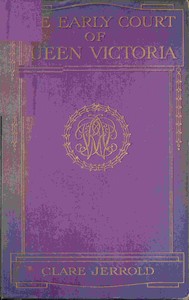
There’s a peculiar loneliness in Ladue’s guide, written so eagerly for men who’d never see the Klondike as he did. That same strange, quiet urgency—a world changing before anyone can fully record it—haunts The early court of Queen Victoria — Context and Discussion. Both feel like letters from a vanished moment, kept warm only by the telling.
Create a short personal record of your experience with this book.




![Cover of History of the Jews in Russia and Poland, Volume 2 [of 3] From the Death of Alexander I until the Death of Alexander III (1825-1894) — Inside the Classic](https://uhuqu.com/storage/media/covers/pg15729.jpg)