About 441 minutes
Mormon Settlement in Arizona A Record of Peaceful Conquest of the Desert — A Closer Reading
Social History
101,361 recorded words. 30 minutes difference from this book's estimate.
View Gutenberg source #9661
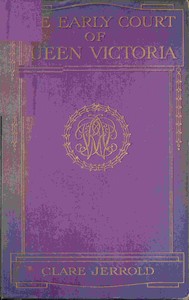
This digital edition of The early court of Queen Victoria — Context and Discussion is described by source-level measurements including 108,310 words, 7 hr 51 min estimated reading time, and 23 detected text sections.
The text analysis averages about 29.3 words per sentence, while the detected sections provide another way to judge how the source is divided.
Project Gutenberg metadata also associates the work with “Great Britain -- Court and courtiers -- History -- 19th century,” connecting these edition facts with the source record’s subject description.
Explore this collection
These alternatives are selected using recorded categories and estimated reading time.
About 441 minutes
Social History
101,361 recorded words. 30 minutes difference from this book's estimate.
View Gutenberg source #9661About 530 minutes
Social History
121,701 recorded words. 59 minutes difference from this book's estimate.
View Gutenberg source #11859About 555 minutes
Social History
127,581 recorded words. 84 minutes difference from this book's estimate.
View Gutenberg source #15729Search stored excerpts and compare books → Choose by your preferences →
Choices use stored catalog measurements. Estimates vary with reading speed. A shared category is a catalog label, not a claim that two books have the same argument or literary quality.
Search reads excerpt text stored with this catalog and links to its associated Gutenberg record. The connection is stored in the site database; this tool does not recheck that every excerpt is word-for-word identical to that external record. Excerpt search does not cover every chapter and does not verify historical publication dates.
Catalog snapshot checked: 2026-09-26. Coverage: 100 public books, 100 available source excerpts.
Calculated from edition completeness, EPUB availability, text structure and catalogue metadata. Not a user rating.
Total of 100 points, scaled to a 2.5-5.0 range. Editions with an empty description or a missing EPUB file are not scored.
Public-domain source text
The source text is kept in the dedicated reader, separate from this catalogue record and its commentary.
Clare Jerrold opens her 1912 study with a frank declaration of purpose: to rescue the young Queen Victoria from what she calls the 'pæan of praise' that had erased her humanity. Rather than offering a conventional biography, Jerrold assembles a portrait from contemporary newspapers, private letters, and memoirs, letting the conflicting voices of the era speak. The result is a narrative that moves between the Queen's private apartments and the public press, where every rumour about a lady-in-waiting or foreign advisor became a political weapon.
Jerrold's preface establishes her central argument: that decades of uncritical reverence had made Victoria 'unpopular' by presenting her as faultless. She recalls her own childhood distaste for the 'I will be good' story, which she saw as a tool of moral instruction rather than a genuine glimpse of character. The author attributes the problem partly to the Queen herself, who believed criticism of the Crown was an attack on the state. This pressure, Jerrold claims, led writers to suppress 'all adverse matter'. Her own method is to restore those suppressed details, drawing on sources that show Victoria as 'frank, loving, truthful' yet shaped by 'undue pride' fostered by her advisors.
Jerrold devotes considerable space to the newspaper attacks on Baroness Lehzen, the Queen's former governess. She quotes the Age and other Tory papers that accused Lehzen of being a 'milk girl' turned spy, a 'German spy' who controlled access to the Queen's dispatch boxes. The language is vivid: Lehzen is called 'a bad-hearted woman' scheming to bring about a 'mercenary and distasteful' marriage to Albert of Saxe-Coburg. Jerrold does not endorse these charges; she presents them as evidence of the 'wild, stupid, and hysterical' atmosphere of the time. The excerpts show how press attacks blended class prejudice, xenophobia, and political factionalism into a campaign against a single woman.
Despite her corrective aim, Jerrold does not simply debunk Victoria. She portrays a young woman caught between competing influences: her mother the Duchess of Kent, her uncle Leopold, and the Baroness Lehzen. The Queen's own 'morbid belief in the infallibility of the Crown' is presented as a flaw with roots in her upbringing. Jerrold's evidence is drawn from the Queen's own words and actions, as filtered through memoirs and official records. The narrative pace shifts between the slow accumulation of court routine and the sudden eruptions of public scandal, mirroring the tension between private life and public role that defined Victoria's early reign.
Jerrold's work is best read as a companion to more formal biographies, not a replacement. It assumes familiarity with the broad outlines of Victoria's early reign and focuses instead on the texture of court life and the noise of public debate. Readers will find the most value in the quoted newspaper extracts and the author's sharp commentary on the politics of reputation. The book rewards those who enjoy historical argument grounded in primary sources, even when those sources are partial or partisan.
Queen Victoria, in Jerrold’s account, was never just a crown, but a young woman learning the weight of it. That private struggle—the space between public duty and personal truth—always reminds me of another quiet soul, old Isaac Hopper, whose everyday decency fought its own silent battles. There is kinship in such unadorned humanity. This memory lingers beside Isaac T. Hopper: A True Life — Inside the Classic, a companion in honesty.
Answer a few questions and save a private reflection on this device.





![Cover of History of the Jews in Russia and Poland, Volume 2 [of 3] From the Death of Alexander I until the Death of Alexander III (1825-1894) — Inside the Classic](https://uhuqu.com/storage/media/covers/pg15729.jpg)