About 61 minutes
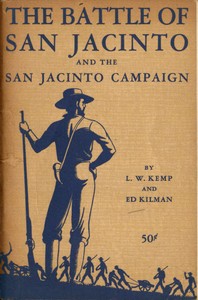
The Battle of San Jacinto and the San Jacinto Campaign — Context and Discussion
Revolutions
13,984 recorded words. 2 minutes difference from this book's estimate.
View Gutenberg source #57849

Before opening The Rise of the Dutch Republic — Volume 01: Introduction I — Background and Themes, the edition data offers a quick orientation: 14,452 words, 1 hr 3 min estimated reading time, and 2 detected text sections.
The text analysis averages about 23.4 words per sentence, while the detected sections provide another way to judge how the source is divided.
Project Gutenberg metadata also associates the work with “Netherlands -- History -- Eighty Years' War, 1568-1648,” connecting these edition facts with the source record’s subject description.
Explore this collection
These alternatives are selected using recorded categories and estimated reading time.
About 61 minutes
Revolutions
13,984 recorded words. 2 minutes difference from this book's estimate.
View Gutenberg source #57849About 58 minutes
Revolutions
13,164 recorded words. 5 minutes difference from this book's estimate.
View Gutenberg source #51556About 109 minutes
Revolutions
25,009 recorded words. 46 minutes difference from this book's estimate.
View Gutenberg source #12033Search stored excerpts and compare books → Choose by your preferences →
Choices use stored catalog measurements. Estimates vary with reading speed. A shared category is a catalog label, not a claim that two books have the same argument or literary quality.
Search reads excerpt text stored with this catalog and links to its associated Gutenberg record. The connection is stored in the site database; this tool does not recheck that every excerpt is word-for-word identical to that external record. Excerpt search does not cover every chapter and does not verify historical publication dates.
Catalog snapshot checked: 2026-09-26. Coverage: 100 public books, 100 available source excerpts.
Calculated from edition completeness, EPUB availability, text structure and catalogue metadata. Not a user rating.
Total of 100 points, scaled to a 2.5-5.0 range. Editions with an empty description or a missing EPUB file are not scored.
Public-domain source text
The source text is kept in the dedicated reader, separate from this catalogue record and its commentary.
Motley begins his history not with the Dutch Republic itself but with the Batavian rebellion against Rome, narrated through Tacitus. The preface announces the Republic as "an organized protest against ecclesiastical tyranny and universal empire," setting a moral tone that pervades the volume. Yet the most striking passage is the abrupt termination of Civilis's story: the bridge across the Nabalia is broken, the Roman and Batavian leaders meet on severed sides, and "the remainder of the Roman's narrative is lost." Motley dwells on this lacuna, calling it a "profound oblivion" that swallows the hero. This editorial note examines how Motley's language and narrative pace—from grand pronouncements to a sudden, almost cinematic halt—shape the reader's experience of incomplete history.
The volume opens with a sweeping claim: the rise of the Dutch Republic is "one of the leading events of modern times." Motley writes in long, balanced clauses—"Itself an organized protest against ecclesiastical tyranny and universal empire, the Republic guarded with sagacity..."—that echo nineteenth-century oratory. The pace is deliberate, almost ceremonial. But when he reaches the Batavian revolt, the rhythm changes. He quotes Tacitus directly, then shifts into a compressed narrative: "The struggle was an unsuccessful one. After many victories and many overthrows, Civilis was left alone." The sentences shorten. The perspective narrows from centuries to a single figure. The climax is the broken bridge, where the story "abruptly terminates." Motley does not invent an ending; he marks the loss. This structural choice—a grand preface followed by a fragment—forces the reader to confront the limits of historical knowledge.
Motley's narrator is present throughout, judging and lamenting. He calls Civilis's struggle "indomitable" and his fate "odious in spite of his heroism." The language is emotional: "The soul of Civilis had proved insufficient to animate a whole people." Yet he also inserts a political analysis: Civilis failed because his country was "hemmed in by the ocean," unlike Hermann's German forests. The voice oscillates between eulogy and explanation. When the narrative breaks off, Motley does not fill the gap. He writes, "upon that broken bridge the form of the Batavian hero disappears forever." The phrase "disappears forever" is both literal and metaphorical—the historical record ends, and so does the historian's ability to follow. This restraint is notable in a writer given to strong opinions. The reader is left with the image of a figure fading into silence.
Motley uses changes in pace to underscore his themes. The preface moves slowly, building a case for the Republic's world-historical importance. Then the Batavian narrative accelerates: battles, sieges, defeats, and betrayals are compressed into a few paragraphs. The pace quickens as Civilis's allies desert him: "Thus murmured the people." The final scene—the colloquy on the broken bridge—is rendered in short, stark sentences: "A colloquy was agreed upon. The bridge across the Nabalia was broken asunder in the middle." Then silence. The abrupt halt mirrors the historical rupture Motley describes: the loss of Tacitus's text, the disappearance of Civilis, the failure of the revolt. By matching form to content, Motley makes the reader feel the gap in the record. This is not a smooth narrative but a deliberately fractured one, where the historian's craft exposes the fragility of memory.
Water imagery recurs throughout the excerpt. The Batavian country is "hemmed in by the ocean" and "accessible by river and canal." The Nabalia bridge spans a "placid stream" that connects the Rhine to the lake of Flevo. Motley emphasizes geography as destiny: Civilis's position was vulnerable because his land was penetrable by Roman waterways. The broken bridge becomes a symbol of interrupted communication—between Roman and Batavian, between historian and subject, between past and present. Even the prophetess who abandons Civilis is associated with the river boundary: she "fell away from her worshipper" and foretold ruin. These details are not decorative; they anchor Motley's argument about the material constraints on liberty. The reader should watch for how physical landscapes—coasts, rivers, forests—shape the political drama in later volumes.
This first volume of The Rise of the Dutch Republic is best approached as a fragment framed by a manifesto. Motley's preface promises a grand narrative of liberation, but the surviving text delivers a broken story about a failed revolt. Readers should attend to the shifts in prose speed—from orotund claims to terse scenes—and to the way Motley handles the missing ending. He does not pretend to completeness. Instead, he makes the loss itself a subject. This editorial note has focused on language and pace, but the volume also rewards attention to how Motley uses classical sources, especially Tacitus, as both evidence and literary model. The broken bridge is not a flaw; it is the point.
Answer a few questions and save a private reflection on this device.